About the Eagle - Emu - Echidna Perspectives
People exercising leadership sometimes feel somewhat “trapped” by the way their inner world – or their team or organisation – operates.
Often the focus can become too procedural. Yes, it’s vital to ensure that “the next job gets done on time”, and that safety and the rules are upheld. And that the money and resources are well-used.
But leadership is not just about the here and now. And by “leadership”, we don’t mean “formal authority” – (although that’s sometimes important too).
By “leadership” we mean “the activity of discerning multiple pathways forward, identifying some of the best pathways, and then influencing self, individuals, teams, organisations and systems to make progress.” Leadership is an activity, not a role.
A challenge many people face is spending too much time on procedural matters: the short-term, the current assignment, “in the weeds”. Meetings and preparation can drag on seemingly pointlessly … more as tick-a-box than as really tapping into inner wisdom and the wisdom of colleagues. Perhaps there’s a feeling of being a little “stuck”?
This sometimes means that broader – vital! - context and opportunity is overlooked.
A recently developed – Australian originated! – way of thinking about leadership activities is the “Eagle – Emu – Echidna” perspectives. Utilising these perspectives may be fundamentally transformative.
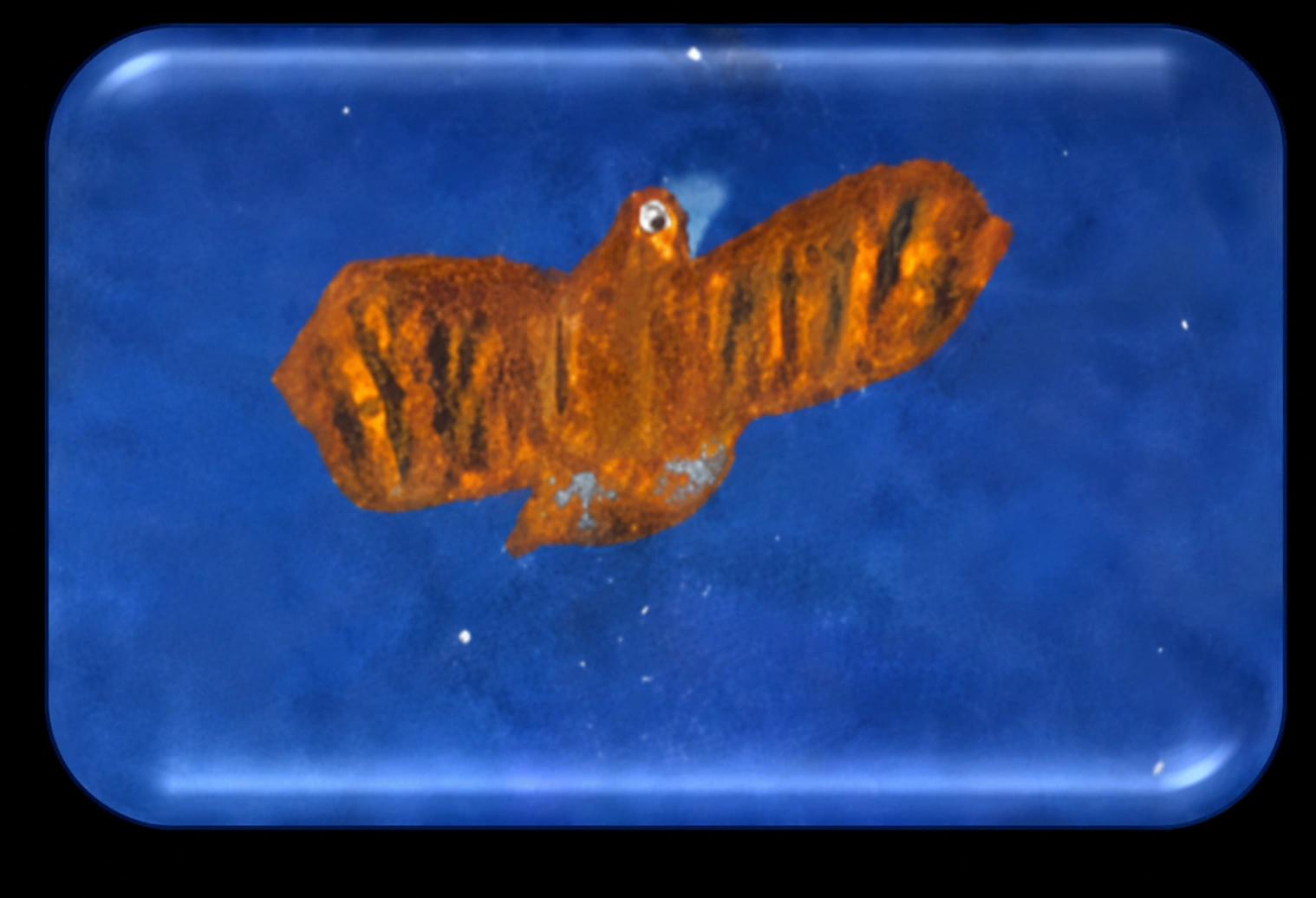
The Eagle Perspective
Eagles can see for miles and miles. They can swiftly see in any direction, over almost any barrier, with a very wide horizon. They stay “at altitude” and can see the broadest context. The Eagle perspective is often the one that many people underplay. The Eagle perspective often feels challenging – often outside some people’s comfort zone – it’s often seen as “too idealistic” or “too remote” or “no time for that right now”. (As Eisenhower quoted: “the urgent often drives out the important.”)
However, really successful people utilise the Eagle perspective well: not all the time, not necessarily every discussion or every meeting: but regularly.
Really successful people give themselves – and their teams – their members “permission” to say “OK, that’s interesting … now from an Eagle perspective, what does that mean for …? (strategic context, potential partner or competitor organisations, broader systems changes, broader funding environment, potential new supporters, etc)”.
Sometimes the Eagle perspective needs to be “pinned”: a brilliant Eagle idea might emerge in a discussion … but the timeline is tight and so you may need to agree to explore the idea further at the next catchup. But usually the idea shouldn’t be allowed to be lost or ignored.
And perpetually ignoring the Eagle can lead to individuals and organisations becoming increasingly irrelevant. As Arie de Geus cheerily stated: “organisations (or people) that adapt more slowly than their environment … are doomed.”
The Eagle perspective is rarely about “next steps”: it’s always about broader context … and thinking about which directions need to more exploration.
The Emu Perspective
Imagine an Emu on a hill. It can see quite a lot (but not as much as the Eagle). It can move around quite swiftly, it can orient itself in almost any direction. Because it’s on a hill, it can see its environmental horizon to some extent – and it’s on-land, so it can also hear/feel/smell/taste. And run fast!
Successful leaders are often in the Emu perspective. No matter the topic, the individual (and team) are considering how it links beyond the “here and now”: how does it link more broadly in the organisation? In the organisation’s immediate strategic environment? In emerging regulatory changes? In emerging social attitudes? In recent strategic current affairs?
The Emu perspective should be part of almost every discussion – even if only briefly. Not to dominate or distract, just to clarify, synergise, amplify … or perhaps specify.
The Echidna Perspective
Echidnas are on the ground, getting stuff done – right in the landscape (sometimes literally “in the weeds”). And leaders mustn’t overlook the Echidna perspective: if they did, their plans or their organisation would likely swiftly fall into trouble. The Echidna perspective includes:
- completing the “report due Friday”
- compliance, risk, supervision … and direct fiduciary duty
- “what does this mean right now”
- naming the “practical next steps”
The Eagle and Emu perspectives are essential to getting the right things done, but the Echidna perspective actually gets those things done.
The Echidna “trap” is that it’s often the easiest place for discussions to exclusively focus. It’s often the “most comfortable” because it’s often about “business as usual”. And often people have a good depth of knowledge about the topic and the focus and like to focus entirely here.
Yet really successful people recognise this potential trap. They still undertake their “Echidna work”, but they also give each other permission to say “OK, we also need to ‘Emu this’ or ‘Eagle this’” or to say “OK, that’s great we’ve explored that topic enough, the stuff will get done … now, next topic.” Caution is needed with this, because some stakeholders may feel uncomfortable that their favourite topic isn’t being focused on enough. This is part of the broader focus of the adaptive challenges which leaders face, particularly as they seek to evolve positive, respectful, trusting team dynamics.
Utilisation
So … Eagle, Emu, Echidna: which one to use?
Use all of them. They’re not either-or. A balance is needed. In every discussion. In every meeting, on every topic. Leaders should consciously pay attention to each potential perspective, and ask themselves whether the balance is optimal, and whether a perspective needs more focus for this topic or agenda item. Don’t get bogged down on “which perspective”, but it’s OK to disagree about the respective balance … in a trusting team dynamic, disagreement leads to enquiry which leads to “agreement enough”. And there’s definite strengths in “inter species conversations”: one or more group or team members considering an Eagle lens while others are considering Echidna. Diversity is strength.
Is Eagle-Emu-Echidna easy?
No. As with all forms of leadership, it can be very challenging. Getting the balance right can be difficult. And even deeply experienced people will often feel deeply uncomfortable from time to time. And that discomfort is usually OK: discomfort often means we’re at “our leadership edge”: i.e. that we’re learning or applying new things, that we’re developing as leaders, that we’re contributing our best. (Discomfort doesn’t mean disrespect, anger or abuse: that’s obviously not OK. Discomfort in this context is a form of personal reflection, personal questioning, personal re-thinking, and deeply development enquiry.)
Is creating “special space” a good idea?
Yes definitely. It may be worthwhile to partition part of a meeting to deliberately consider issues mostly through Eagle or Emu perspectives. Or potentially, to schedule a meeting as primarily “Eagle and Emu”. And definitely to create “strategy” gatherings where everyone very much recognises that a longer-term, broader perspective is being explored: where the gathering is almost entirely “Eagle and Emu”. (While still having “Echidna” next steps as outcomes: there is of course a risk that being solely “Eagle and Emu” might be inspirational … but if there’s no plan for “next steps”, then there’s a definite risk of a “talk fest” that ends up being dispiriting. Whereas part of the joy of “Eagle and Emu” approaches is that they can definitely be joyful, inspirational and purposeful. Team members often report that they personally feel much more connected to their person life purpose when they have these opportunities.)
Is Eagle-Emu-Echidna important?
Yes. People who successfully utilise all three perspectives are set up for success. They will likely thrive, and their organisation’s purpose will likely thrive. Because for-purpose organisations don’t exist for themselves: while they DO need to be sustainable, for-purpose organisations exist for the change they make in the world.
Almost all teams already utilise Eagle-Emu-Echidna perspectives - at least to some extent. The challenge is to continually ensure the optimal balance.
And in conclusion
The Eagle-Emu-Echidna perspective is just one aspect of really effective leadership. Trust, enquiry, technical skills, technical knowledge, adjacent knowledge: these are all important too.
Utilising the Eagle-Emu-Echidna approach is very likely to help create your best possible impact, to help maximally realise the incredible talent in you and people around you. This will help you create your best possible legacy: especially in an AI world.
… and some context
The Eagle-Emu-Echidna concept is an evolution of the Heifetz and Linsky “adaptive leadership” model, who refer to “on the balcony and on the dance floor”. At a recent national summit, noted Indigenous Leader Mark Yettica Paulson expressed his dislike for that artificial framing, and suggested “Eagle and Echidna”, which then evolved further, and is now part of a soon-to-be-published book on Board leadership. In preparation for that book, noted Indigenous artist Thelma Beeton was commissioned - via the world-leading Torch Project – to create an artwork for the book cover – which appears at the top of this document. Respect is given to Thelma, Mark and all Indigenous leaders across our lands, including for their leadership in so many diverse and persistent ways.